

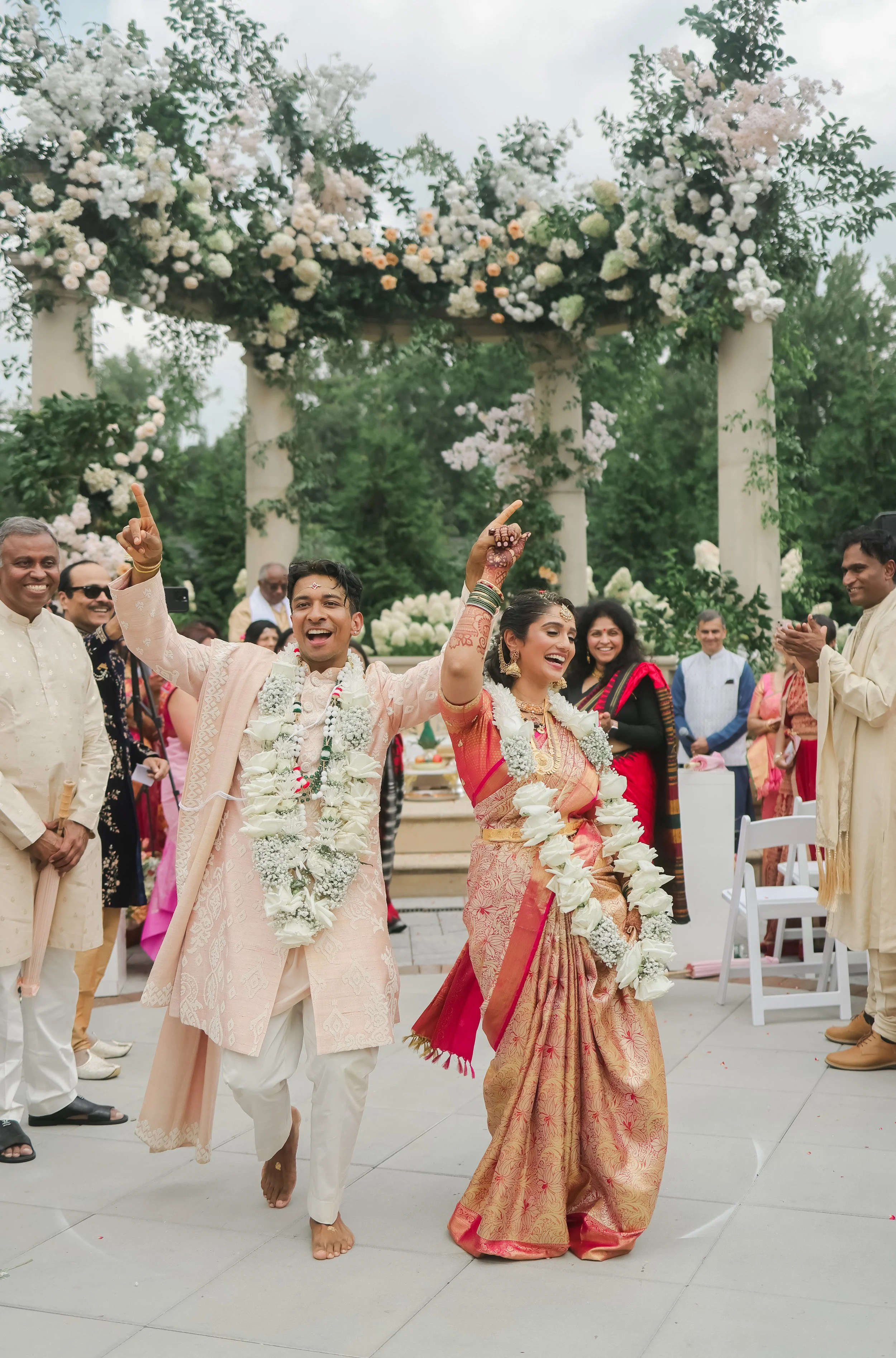
When you picture your ceremony, you may be thinking about the people you will see as you walk in. Your parents. The friend who traveled across the country. Someone quietly wiping away a tear.
Asking guests to put their phones away can make room for that connection. But there is another part of the invitation worth thinking through: how will they keep a photograph of a moment that matters to them, too?
Our recommendation is to plan both together. Be clear about when phones should be away, who is documenting the ceremony, and how you will share the photographs afterward.
Make the request specific to your celebration
An unplugged ceremony usually means asking guests to refrain from taking photographs or recording during the ceremony. It does not have to extend to cocktail hour, the reception, or every event across your wedding weekend.
Decide where the request begins and ends. Does it include the processional and recessional? Are guest photographs welcome once you reach cocktail hour? Is waiting to post on social media a separate preference? Say each part plainly so your family does not have to interpret the word “unplugged.”
In Vogue’s February 2026 coverage, photographers describe how phones can obscure expressions and affect the experience of walking toward loved ones. The reason to put them away can be as personal as wanting to see your family looking back at you.
Let guests know early, then remind them gently
Include a short note on your wedding website. A small sign or a line in the ceremony program can repeat it on arrival.
The Emily Post Institute recommends discreet written reminders and also accepts a brief announcement before the processional, while noting that an announcement can interrupt the anticipation. Planners interviewed by The Knot emphasize the usefulness of a reminder from the officiant. Choose the approach that fits your ceremony, and keep the tone welcoming.
Here is wording you can adapt once your photo-sharing plan is confirmed:
“We’re so happy you’re here. During the ceremony, please silence and put away phones and cameras so we can share this moment together. Our photography team will be documenting it, and we’ll send a link to selected photographs afterward. You’re welcome to take your own photos at cocktail hour.”
If family members would appreciate hearing the request in another language, ask someone they know to help communicate it beforehand. Guests who need a device for accessibility or medical reasons should be able to keep using it discreetly.
Confirm what your professional coverage includes

Before reassuring guests that the ceremony is being documented, review the actual plan with your photography and cinema teams. Talk through the ceremony’s sequence, important family members, venue restrictions, and where each team can work.
For a multi-day celebration, confirm coverage event by event. A photographer booked for the wedding day may not be covering the welcome dinner or a ceremony the evening before. If hearing the complete ceremony again matters to you, discuss audio recording and full-ceremony film deliverables separately from photographs and a highlight film.
Clear aisles help the team work, but no phone policy guarantees every expression or moment will be photographed. The useful conversation is about priorities and coverage, rather than a promise that nothing can be missed.
Give the photographs a clear way back to your guests
Agree on the sharing process before printing a QR code or promising a delivery date. Ask your photographer what gallery access, downloads, passwords, and sharing options are available with your collection.
You might use a page on your wedding website that you update when selected images are ready. A QR code can lead guests there after the ceremony; include a readable address or a family contact for anyone who prefers help. Until photographs are available, the page should simply say that an update will follow.
Choose one person to send the link once you have reviewed what you want shared. Keep personal preparations or smaller family gatherings private if that feels right. An invitation to view photographs does not have to mean access to every image.
Remember the relatives who attended a different day
Your aunt may be joining the mehndi but leaving before the wedding. A grandparent may attend the ceremony and head home before the reception. Someone overseas may be following along through family updates.
With your photographer, consider a guest-facing selection organized by event. Then send it to the relatives you want included, even if they were not at the final celebration. Ask a trusted family member to help anyone who would find a digital gallery difficult; a few prints may be more meaningful to them.
If you would also enjoy guest snapshots, disposable cameras can be a reception activity. Assign someone to collect them, arrange developing, and share the results. They are a separate keepsake, with unpredictable results, rather than a replacement for planned ceremony coverage.
A thoughtful photo plan lets your guests relax into the ceremony and gives them a way to revisit it with you afterward.
Planning your wedding photography? Tell us about your celebration, including the people and moments you want to make room for.
