

To be more present on your wedding day, close ordinary decisions beforehand and give someone you trust permission to handle small changes. You do not need to supervise every detail to care deeply about the celebration you created.
By the morning of your wedding, the flowers have been ordered, the timeline exists, the tables are set, and the people you trust are in place. Most of the important decisions have already been made.
And yet, the temptation to keep managing can follow you into the day itself.
A small detail looks different than expected. Someone is running late. A family member has a question. The weather changes. The room is not quite ready when you first see it. None of these moments is unusual. But if every change reaches you, the wedding can begin to feel like a production you are supervising instead of an experience you are living.
The goal is not to create a wedding where nothing goes wrong. The goal is to prepare well enough that every small problem does not require your attention.
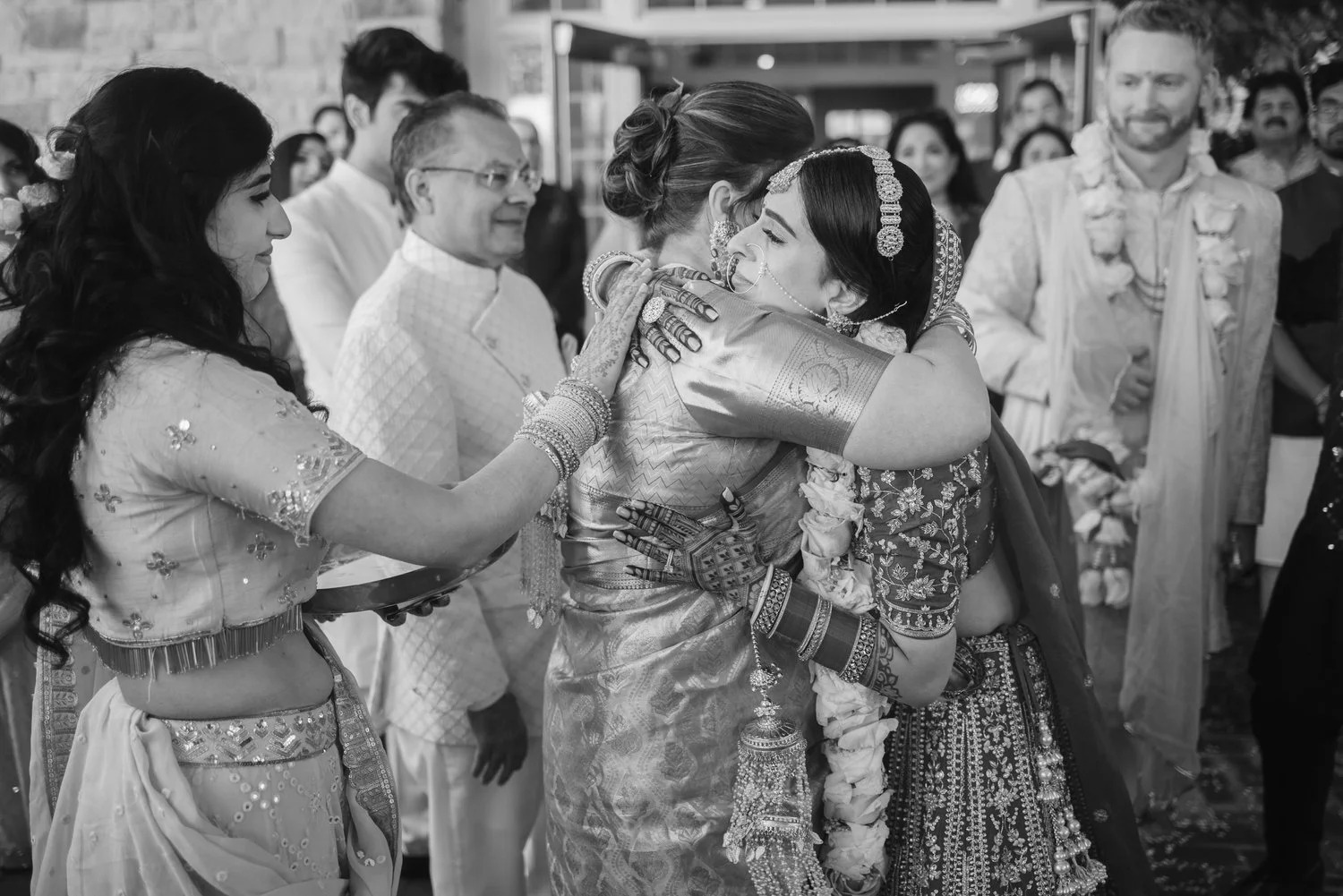
Presence begins before the wedding day
Being present is often treated as a feeling you should be able to summon on command: take a breath, put down your phone, and enjoy the moment.
That can help. Presence is also easier when the conditions around you support it.
If unresolved decisions are still waiting for you, if no one knows who can answer a question, or if every small change needs your approval, your attention will keep being pulled away. You may be standing in the room while mentally managing five other rooms.
A calmer wedding day usually begins with something less romantic but more useful: giving decisions an ending.
Set a decision deadline
Choose a point in the final days before the wedding when active decision-making will close. This is not a deadline for caring. It is a boundary between creating the wedding and experiencing it.
Before that deadline, gather the choices that are genuinely unresolved. Decide what still needs your voice. Then hand the remaining questions to the people you have already trusted to carry them.
After the deadline, a new idea should clear a higher bar. Ask whether it materially changes safety, timing, a meaningful tradition, or the experience of the people in the room. If it does not, it may be a preference that no longer deserves your attention.
This distinction matters because last-minute perfection rarely arrives as one dramatic problem. It arrives as a series of reasonable little questions. Each one feels harmless. Together, they can consume the hours you were trying to protect.

Separate what needs you from what only wants you
Not every decision has the same consequence. A useful final review is to sort the remaining questions into two groups.
Questions that change something meaningful, such as safety, contractual commitments, an important family or cultural decision, or a major shift in timing.
Questions that affect a small preference, minor styling choice, or ordinary adjustment that a trusted professional or point person can resolve.
The first group may still need you. The second usually needs clarity and permission, not your continued involvement.
This is where many couples unintentionally hold on too tightly. They have chosen capable people, but those people are still waiting for permission to use their judgment. Trust becomes useful only when it is paired with enough authority to act.
Give one person permission to protect your attention
Before the wedding, identify one calm, capable person who can receive ordinary questions on your behalf. This may be a planner, coordinator, or trusted person who understands the day and knows when something is important enough to bring to you.
The role is not to make every decision. It is to keep every decision from arriving at the couple by default.
Be clear about the boundaries. Tell this person what can be adjusted without you, what must come back to you, and who else can answer specialized questions. A vague request to “handle things” is less useful than real permission to solve small problems.
Once that permission is in place, resist the urge to keep checking whether it is being used exactly as you would have used it. Delegation does not work if the decision returns to you through constant updates.

Decide what good enough looks like before emotion is high
Perfection is difficult to release when you have spent months making thoughtful choices. The closer the wedding gets, the more every detail can feel connected to the whole vision.
That is why it helps to define your standard before the day begins.
Which details are essential because they carry meaning? Which ones are beautiful preferences? Which ones would you barely notice if no one pointed them out? The purpose is not to lower your standards. It is to protect the difference between what matters and what merely changed.
A boutonnière can go missing without changing the promise being made. A table detail can shift without changing the warmth in the room. A schedule can move by a few minutes without erasing the people who gathered to celebrate you.
Photography can make this distinction clearer later. The images that become most valuable are not always the ones that prove every element was perfect. They are often the ones that show what the day felt like while it was unfolding: the expression you did not notice, the hand you reached for, the person watching from across the room.
You can see that kind of attention throughout the JJS wedding portfolio.
When something changes, return to what the day is for
You do not need to pretend that changes are pleasant. You are allowed to be disappointed when something you planned does not happen as expected.
But you can decide how long that change receives your attention.
Ask one simple question: Does this need me now, or can someone I trust carry it? If it needs you, make the decision and release it. If it does not, let it move away from you.
The point is not emotional detachment. It is choosing not to spend irreplaceable time solving a problem that can be solved without you.

Your attention is part of the wedding
A wedding is not only the room, the flowers, the fashion, or the timeline. It is also where your attention goes while all of those things are happening.
If your attention stays on the clock, the unanswered question, or the detail that shifted, those things become part of your experience. If your attention returns to the people in front of you, that becomes part of the experience instead.
Your wedding day is not the time to perfect the wedding. It is the time to experience the wedding you created.
Prepare thoughtfully. Close the decisions that need closing. Give trusted people room to help. Then let the day become more than the plan.
Spend your attention on the people in the room.

Questions about being present on your wedding day
How far before the wedding should we stop making ordinary decisions?
Choose a deadline that gives your planner, coordinator, family, and creative team enough time to receive final answers. The exact day will depend on your celebration, but the principle is consistent: close preferences before the wedding so only meaningful changes can reach you once the day begins.
What should still come to us on the wedding day?
Keep your attention available for decisions involving safety, an important cultural or family matter, a contractual commitment, or a meaningful change to the experience. Ordinary adjustments should move through the person or team you have already trusted.
Is accepting “good enough” the same as lowering our standards?
No. High standards belong in the months of planning and in the people you choose. On the wedding day, “good enough” means recognizing when a small change no longer deserves time that cannot be recovered.
What if I know I will still want updates?
Agree on a narrow update rule before the day. Ask your point person or planner to bring you only the decisions that meet that rule. Constant reassurance can recreate the same management role you were trying to release.
Whether your wedding is in New York City, New Jersey or Connecticut, the useful question stays the same: which decisions need your attention, and which can your chosen team carry?
If you are looking for an approach that protects both the experience and the images, you can begin a conversation with Jashim Jalal Studios.
